
Redefining success on our own terms
Last week, I wrote about our definition of success and achievement and where it comes from. I shared how my own, strongly-held definition started changing, which in turn drastically changed the way I look at success and define my own achievements, career, and journey.
As we know, our life and priorities change, our identities evolve and expand. And that version of success, we chose at 20+ and chased for some years, no longer feels aligned with who we are today. But only once we start questioning our inherited definition of success we get to understand why things have been feeling off - something starts to shift.
Motherhood and quiet redefining
If leaving Brazil was my first lesson on a path to redefine my own definitions, motherhood was an entire master class.
I believe motherhood humbles even the most prepared among us. Holding a newborn as a first-time mother is unlike anything else. You know nothing. You learn as you go.
Motherhood certainly challenged my tendency for self-criticism and perfectionism. It taught me that I cannot control everything. In that life-season, success becomes small and immediate: your baby finally falling asleep, a feeding that works, a tiny milestone in their development that feels huge.
It puts the word success into a whole new context. It taught me that success is happening in the moment. It is not some distant goal post that keeps moving, as it has always been the case - it can also be here and now.
It was also the first time I understood that life has seasons and that each season has a different bandwidth. This may sound obvious, but for high achievers, it is not always. And the definition of success changes and evolves, too, as seasons change.
What I’ve Stopped Chasing
In the last few years, especially after becoming a mother of two, I have noticed that I have slowly stopped chasing something I always did, to a different extent: the approval and expectations of others.
This shift showed up in small ways first, and later in bigger ones - like the decision to begin writing and sharing my thoughts publicly. Writing exposes us. Sharing our opinion invites judgment. And whether we admit it or not, we all judge (and usually despise being judged!).
There is a darker side to living in a hyper-connected world. Platforms like LinkedIn amplify comparison. Twenty years ago, we mostly knew what the people close to us were doing. Today, we see what everyone is doing, or at least what they want us to see. Everyone can look at our profile, examine our choices, and silently evaluate whether it’s “good enough.” This is intimidating to me, but it must be daunting for someone starting a career or looking to change it.
I used to care about that. If someone from my “past life” checked my profile, my mind would immediately ask: What are they thinking? Is what I’ve done so far “enough”?
That “good enough” is an interesting concept: vague, undefined, yet strong enough to drive so much of our behaviour.
The truth is, there are as many definitions of “good enough” as there are people in the world. What it represents for you may not represent the same thing for me. And even within one´s own life, it can mean different things in different areas.
It is astonishing to what lengths we go in order to meet standards that other people have defined, often people we don’t even know.
We judge. We compare. And comparison becomes yet another external definition of success. I once read that comparison is also the biggest thief of joy. Because there will always be someone who seems more successful, more balanced, more accomplished.
(Seems is the key word here)
When those familiar names appear on my profile now, they often bring nice memories. They remind me of our shared chapters: schools, university, jobs, and old versions of myself. Often, I reach out, and we reconnect. And we rarely talk about careers. We talk about life.
That reconnection would not have happened if I were still consumed by my own mind and its fear of being judged and evaluated.
What I Refuse to Sacrifice
What I am no longer willing to sacrifice in the name of achievement is how I feel about myself:
– the constant sense of not being good enough
– the quiet pressure to do “just one more thing.”
– the knot in the stomach
– the fear of falling behind
These feelings used to be my baseline. Today, they are my signal that something is off (and that still happens often enough!).
If something feels tight, constricting, or anxiety-inducing, I try to pay extra attention. Ease is no longer, for me, a sign of laziness, derived from the belief that “things have to be hard”. Rather, ease has become a sign of alignment.
What Success Looks Like in This Season
Balancing a family with two toddlers and a portfolio career, success changes its definition daily.
Some days, everything flows: I consult, hear pitches, write, coach, spend quality time with my children, talk to friends, read, and exercise.
Other days, nothing seems to work, and everything feels overwhelming.
Success, in this season, is accepting both - and this acceptance doesn’t always come easily.
For me, success today is knowing (and sometimes “only” believing) I’m doing my best with the life I have right now and remembering that this specific season won’t last forever.
Success today looks like:
– a career designed to fit who I am today
– working on my terms
– quality time with my children
– staying connected to people I care about
– yoga or sport
– reading as much as possible
If most days include 3 or more of these points - well, that is success!
If Success Were a Feeling
If success were a feeling today, it would be peace of mind.
Not perfection. Not appearing perfect or in control. Not relentless striving.
Peace in knowing I’m where I need to be, doing what needs to be done, in a way that fits my life now.
What I Had to Unlearn
I had to unlearn that: – success must be linear – it must match society’s definition – it must impress someone – it must be immediately visible
And I learned that it must include what truly matters to me. And realign almost daily.
My body, and not my mind, which always used to “run the show”, now tells me when I’m on the right path: a sense of expansion, ease, lightness.
Tightness and anxiety are my signals that something is misaligned.
Redefining success
Redefining success isn’t a one-time decision. It’s an ongoing practice - of meeting yourself honestly, acknowledging the season you’re in, and building a definition that’s truly yours.
Not inherited, not expected, and not assumed.
The moment success becomes personal and internal, everything starts to feel more aligned and move with more ease than before - at least until the next minor emergency ;)

Success, unlearned: what if the definition was never yours?
For a long time, I believed there was only one definition of success. And I so often did not feel that I was meeting it, at least not in the “prescribed” way.
Back during my time in London, I had a few friends who also worked in banking, but in corporate finance. It was tough to see them - they would come home after midnight, leave for work in the morning. And I often wondered, “Do they really consider this as normal?” But as it happens, there was always someone who worked more. Another M&A team member is staying one or two hours longer. Another group pulling all-nighters. “Ours is not that bad,” they’d say. As always, everything is relative.
You might think: “Ok, this is an extreme example”, and it is to some extent. But if we are honest, back then, and still today, the longer you worked, the more intense your job is (or seems to be), the busier you are = the more successful you appear. In our world, the hustling is worn as a badge of honour.
When you start your career inside such an environment, or more accurately, such a bubble, you often don’t question the underlying logic. You simply accept it as normal. Your entire peer group is doing the same thing, so how wrong can it be? And even if you feel something doesn’t fit, that something feels off, that such a way of working and living doesn’t sit right - you carry on anyway.
Evolving Definition
For me, something about that definition of success always felt wrong, but it took me years to understand why.
I felt out of place. I wanted some life, too. Why live in those incredible, cosmopolitan cities if you never get to enjoy what they offer? Back then, that wasn’t seen as particularly ambitious - certainly not by those opting for 70-80 hour weeks.
Any resemblance to “work-life balance” (confusing label!) was quietly looked down upon. To draw a parallel from the startup world I’ve been part of for some years now: it’s like pitching to a VC and having them dismiss your idea as a “lifestyle business.” Not ambitious enough. The market is too small. Not scalable. Not fund-returning potential. There’s an unspoken judgment in that label, as if to say, “You want to build something big and have a life?” In the VC game, the answer is often no, and that is fine, because the rules of that game are clear - and choosing to play it is optional.
When it comes to our careers, though, we should be in the driving seat. And any return on investment - emotional, financial, or otherwise - is ours to bear, for better or worse.
Lastly, we change. You’re not the same person at 40 that you were at 25. Your life, your environment, how you work, the world itself - everything shifts. So your definition of success should evolve, too. But for many high achievers, it doesn’t. Because what we think is “our definition” is often not ours at all.
Where Our Definition Comes From
Most definitions of success start long before we become aware of them. They start in childhood. They form in the small, unspoken moments: in how our parents or caregivers talk about work, money, colleagues, ambition, what they classify as success, failure, “good jobs,” “safe jobs.”
The foundation is set early, for example:
If your parents had stable, government-backed jobs, you might have internalised safety as the highest value.
If your parents were entrepreneurs, you might lean toward independence, or avoid it entirely after witnessing close up what a rollercoaster or even crash test owning a business can be.
If you grew up surrounded by “traditional success”, you may have learned to see it as the only acceptable path.
These are not rules or by any means all the possibilities; they are simply reflections of our environments.
For me, academic success was expected. Best grades weren’t celebrated - they were assumed. When I went abroad for high school, the expectations intensified. “If you get into a good university, you’ll get a good job.” Eventually, those expectations became my own. Summers without activities? Not an option. Courses, internships, extra work were the norm - I mean, something has got to fill that resume!
But here is the strange part: The actual goal was never clearly defined. What was the endpoint? What was “enough”? What exactly was I striving toward?
And the truth is: without a clear destination, you can never “arrive”.
The captain without a compass
We become captains of a boat without a destination or a compass. Or, as Seneca famously put it: “If a man knows not to which port he sails, no wind is favourable”. We flow and float, and we do things, but the key thing is missing: the vision and the clear intention. When expectations are high, but clarity is low, there is no way to feel satisfied. Regardless of how we toss and turn it, we cannot get “there” if we do not know what “there” is.
Peer pressure cements this. When I started my MSc in Finance in London, everyone was applying to banks, funds, or consulting firms. Even if you arrived not really knowing what you wanted to do? Well, you quickly “learned” what success should look like.
Promotions. Titles. Salaries. The “right” postcode. The “right” holidays. The “right” nursery and schools, once children arrive.
And slowly, you adopt it all as your definition. Success becomes external - measured by others, and validated by others.
A First Moment of Real Redefining
Interestingly, one of the proudest moments of my adult life had nothing to do with traditional career success. It was the moment I decided to leave Brazil after four years of living and working there.
I moved to that beautiful tropical country in my mid-twenties; not when the timing made sense, not when the economy was booming, not when the markets were strong. Actually, quite the opposite: the country was entering a recession, I did not have a job, did not speak the language, and on paper, that was a completely illogical decision. Except my intuition told me it was the right one.
Fast forward a few years, and the same quiet inner knowing told me it was time to return to Europe. People would often ask, “Do you miss it? Will you go back?” And the answer was a clear no. And, for the first time in my life, I felt something new: peace and fulfilment.
Peace because the decisions were only mine. Peace because I had finally followed my own compass, not someone else’s. And fulfilment because I realised success could be defined in ways far beyond what we traditionally celebrate. It was the first time success felt internal, not external.
We all have moments like this - moments of real achievement that don’t fit the typical “success story” narrative. The trouble is, we rarely value them enough. When I ask my clients to list their greatest achievements, they almost always give me the obvious, resume-worthy answers. Meanwhile, some of the most extraordinary things they have done, both in work or in life, they dismiss, overlook, or do not even register as success.
Redefining success
Redefining success does not start with a new job, a new company, or a new ambition. It starts with understanding where your old definition came from, the voices that shaped it, the expectations we absorbed, and the pressures we inherited without choosing them.
Once we see that our definition of success was not “ours” to begin with, we finally create the space to ask what comes next.
In the next article, I will explore exactly that: how our definition of success evolves when our life changes, when we change, and once we begin listening inward rather than outward.
The myth of having it all
A humbling beginning
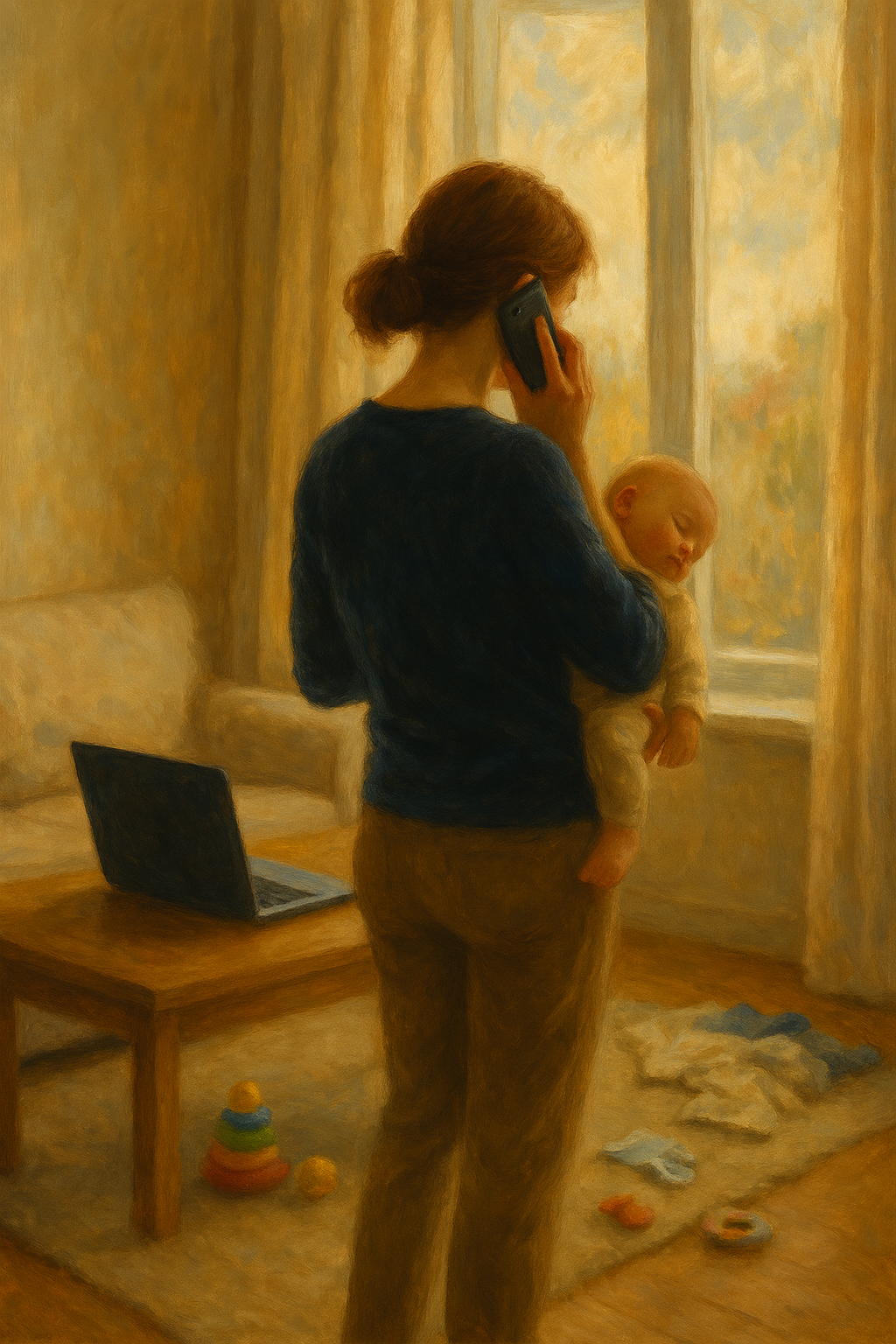
Five years ago, I recall telling my then-new boyfriend (now my husband) about two close friends who had just had their first baby and brought their mothers in for a few months to help. I genuinely could not understand why. It is two adults and one baby, how hard can it be?
He laughed and said he would remind me of those words one day. Then he asked me if I truly believed one could “have it all.” Absolutely, I said. Why would it not be possible? After all, it just comes down to being well-organised.
And then came the reality check. A difficult pregnancy, a premature birth, and a narrowly avoided postpartum depression stripped away every illusion of control I had. It was deeply humbling, to say the least. Then came the second child, and life with two under two just confirmed what I was already starting to realize: we can have it all, just not all at once.
The weight of expectations
I know women whose ambition only grew after having children, whose vision became even bigger and bolder than before. I admire them.
And then, some women become mothers and realize they love it so much that being a mum is enough. They devote themselves fully to the toughest and most underappreciated job in the world, where constant work often leaves little to no visible trace. I probably admire them even more.
I believe it is beneficial for every woman to work, but to the extent that family logistics and finances allow, the form that work takes should be her own choice. To do that, though, we must peel back the layers of expectation that have built up over the years: what society, family, and friends tell us we should want.
On one end, there are places where women are expected to marry earlier, have children, and stop working. On the other end, there is the unspoken assumption that if you have gone to top schools and built an impressive résumé, you must “use it” or risk failure. Different worlds, same fear: the fear of disappointing others, of not fulfilling our potential, of somehow failing.
And that is the irony: “failure” itself is a construct. It can mean opposite things depending on who you ask. Working or not working. Being “too ambitious” or “not ambitious enough.” Which only shows it does not truly exist.
Seasons, not a superwoman
My husband was right in questioning my belief. The key is “not all at once.” I truly believe that over our lives, we can be, do, and have all we want. But not at the same time.
Life moves in seasons. Priorities shift. The years of newborns and toddlers, filled with short nights, navigation of early years challenges, and total exhaustion, cannot be compared to the years when our children become independent. (If you haven’t yet read The Book You Wish Your Parents Had Read by Philippa Perry, I cannot recommend it enough)
Also, children need us differently as time passes. In those early years, they need us to make sense of their world, themselves, and their emotions. Other people can, of course, help, but there is something that cannot be outsourced, and that is our presence.
The rush that never ends
In my work with exceptional, driven women, I often hear the same things: They are working twelve hours a day, feeling exhausted, guilty everywhere: at work for not doing enough, at home for not being present enough, frustrated for not having time for themselves.
They feel constantly behind, chasing a train that never stops.
When I tell them that, if they’re in their late thirties or early forties and in good health, they’ll likely work another thirty years, there’s usually a long pause. We live longer, retirement may come later (if at all). So why the rush? What are we afraid of missing?
The seasons that matter
The truth is, the years when children truly need us most are just one season of life. After that, we have decades to achieve everything else.
A woman I very much admire had four children close together, stayed home for a decade, and then went on to create one of the leading global conferences in her field. By postponing her ambition, she was able to dedicate one season to her children and then catch up in the next one.
However, it does not have to be one way or the other. It does not have to be a full return to 'business as usual' or a complete withdrawal to 'stay at home.' We are lucky to live in a time when so much more is possible: new career designs and options have opened up possibilities to combine our life and work in ways that better fit our priorities and the season of our lives.
Normalizing every choice
The unpleasant truth is: we all have only 24 hours in each day. Time is the most valuable thing we have. If we look at key areas of life - family, career, friends, social life, and our own well-being, we realize an even more uncomfortable truth: something has got to give.
And whatever the choice, it is fine, as long as it is ours.
Ideally, we took a conscious decision, thought it through, identified our priorities in that specific season of life, and acted accordingly.
That choice can be building or running a unicorn, being a partner at a prestigious financial institution, or raising children and doing some work aside when time allows - and everything in between.
Every woman who seems to “have it all” knows the invisible cost: precious moments missed, friendships neglected, interests abandoned, and the guilt. And those who made different choices sometimes miss their “old selves,” the version who existed before nappies and toddler tantrums.
So yes, you can have it all - just not at once. And maybe that is not a loss after all.
Writing on career redesign, portfolio careers, and navigating professional transitions. Most articles first appear on LinkedIn and are archived here.

Why we stay when it no longer fits
When the noise of everyday life quiets - during a late-night feed, a walk to the office, or a rare moment alone - the question might start to circle: Is this still me?
We do not plan for identity shifts. They creep in slowly, until one day the version of ourselves that once fit perfectly feels too tight, like a dress we have outgrown but still try to squeeze into.
For many high-achieving women, this moment does not come with a dramatic event but with a quiet realization: the career that once defined us no longer feels like home. And yet, despite knowing this, we stay.
The Identity Shock
In many countries, maternity leave lasts only a few months (if at all). Some genuinely want to return to work as soon as possible. But many go back not out of choice, but fear: fear of losing clients, opportunities, or relevance. It’s often fear disguised as obligation or necessity.
Motherhood (and fatherhood!) transforms us in ways we can’t predict. The new identity born with a child reshapes everything - our worldview, priorities, emotions, and sense of self.
Many who planned to return after a few months change their minds once they hold their baby, and then feel guilty for not doing what their “old self” would have done. So they push on, following what’s expected - the nurse, the school, the clubs - until they’re quietly driven by expectations, lifestyle costs, and "fear".
And so, they stay.
The Identity Trap
At first, it is subtle. A couple of small compromises, an unspoken comparison here and there. And before we know it, we are trapped - by lifestyle, by expectations, by the weight of what we’ve built.
In my work, I’ve heard the following sentences over and over again:
“I’d love to move out of London, but where else would I earn this much?”
“I’d love to work in something more creative, but those jobs do not pay enough.”
“I’ve worked so hard to get here. How can I just walk away?”
“If I leave, I’ll have to start from zero.”
“What would I tell people?”
These sentences all share common fears: the fear of losing status, safety, and ultimately belonging (remember the sabre-toothed tiger from my previous article?). And underneath that fear lies the question we rarely voice:
“Who am I without this job title and outward success?”
Why we stay
Our careers take the center stage the moment we start working, especially in demanding industries where twelve-hour days are the expected norm. And when everything changes, when family enters the picture, when our priorities shift, we suddenly realize how deeply our worth has become tied to what we do.
There are four main reasons we stay trapped:
1. Financial safety
Even when we earn well, we may not feel financially safe. That feeling rarely correlates with income; it is primarily tied to what we learned about money growing up and the beliefs we developed about money. Some of us were raised around financial anxiety or instability, others in environments where success meant security. Throw in some generational trauma (war, hyperinflation, bankruptcy, etc.) and you have a perfect storm.
The belief that “I’ll feel safe once I earn a bit more” often keeps us running in circles - for example, waiting for one more (deferred) bonus before even considering a change.
2. Fear of the unknown
If you’ve spent years, maybe even decades, in the same industry and/or similar type of role, it is very understandable to wonder: What else could I even do?
Somewhere along the way, we started to define ourselves by our job descriptions. We tend to underestimate how much experience, skill, and perspective we’ve built over time. And we forget that our abilities are transferable and that reinvention doesn’t mean starting from scratch - it means starting from experience.
3. Your identity
This is often the hardest one. For high-achievers, our value has been measured for years by external success: job title, company name, career achievements. When that’s gone (or merely questioned), it can feel like a loss of self.
In truth, it is not failure; it is evolution. It is the moment when you begin to separate who you are from what you do.
4. Community
Some of us are fortunate to work in a supportive, friendly work environment surrounded by great colleagues. At the end of the day, we are social animals and like to be a part of the tribe where we feel we belong. This is not easy to give up, especially taking into account that many other career paths, while offering other “perks” and advantages, might, by default, be lonelier ones.
Redefining success
This is a key turning point, the space between who we were and who we’re becoming. It can feel disorienting, but it is eventually deeply liberating. Staying trapped isn’t failure; it’s feedback, a sign we’ve outgrown what once fit. A quiet nudge to pause and ask: Who do I want to be? What does success mean for me now?
The real work begins with an identity shift, as we revisit the parts of ourselves we’ve set aside: our values, passions, and life beyond work. And before the change actually materialises.
For many, this is the moment to imagine a different kind of career: one that allows us to use our skills fully, explore new paths, and design work around our present life situation, not the other way around. Then, success is no longer what society, colleagues, or peers say it should be. It’s what and how we define it for ourselves.
Writing on career redesign, portfolio careers, and navigating professional transitions. Most articles first appear on LinkedIn and are archived here.

When careers chose us
The early path
More often than not, our careers choose us rather than the other way around. Very few women I know knew from a young age that they wanted to enter the world of finance, consulting, or law. Unless there was a parent, family member, or role model in a specific field, we likely didn’t even know such careers existed.
For those of us who followed a more traditional path - good grades, good university, perhaps a top master’s program - the guidance we received pointed us toward certain “successful” industries. For those of us who started our careers in the 2000s and are now in our mid-30s to mid-40s, it almost felt like an unspoken rule: if you’ve worked this hard, you should aim for a prestigious, well-paid job.
Add to that the cost of living in cities like London, New York, or Paris, and the lower pay in more “meaningful” industries, and the decision often made itself. Many of us began our careers in investment banks, consulting firms, or large corporations, climbing the ladder, switching firms (or not), and chasing promotions and higher compensation packages. Some shifted later into hedge funds, PE, VC, or tech startups. A few struck out on their own. But the pattern was the same: one opportunity led to the next, and before you knew it, a decade or two had passed.
The family crossroads
And somewhere along the way, the wish to start a family appeared. For some, this happened in a long-term relationship; for others, after a few not-so-great ones. Ideally, we figured out what we wanted, we met the right person, and sometimes, within just a few years, one or more children arrived.
Sometimes it happens during maternity leave, sometimes after returning to work, sometimes after the second child is born. But sooner or later, for many of us, the realization comes: combining it all was tougher than expected. We want to remain ambitious, high-achieving, driven women, but almost suddenly, the moving parts have multiplied.
And that’s when the confusion begins. “But I’m the same,” we think - even though nothing truly is. Over the years, our work and success have become a key part of who we are, often the core of our identity. Who are we without them? What do we say when we introduce ourselves at a dinner table, if not our title and company name?
The quiet return to the rat race
This is all particularly emphasized in cosmopolitan hubs, where the pace is relentless and expectations are high. And where life can be extraordinary - if you can afford it. And, bigger families meant bigger apartments, higher rents or mortgages, higher childcare costs, and higher peer pressure: from private nurseries to “the right” schools and neighborhoods. The result? A quiet return to the rat race.
Questions begin to surface, one after another:
How do we step away from a career that has become such an integral part of who we are?
Who are we without the title, the salary, the lifestyle?
How do we maintain what we have built for ourselves, our families, and our sense of identity?
How do we give our children the best, as we and our peers define it?
And, how do we stay in a game that no longer fits who we have become, yet feels almost impossible to leave?
The quiet beginning of transformation
Somewhere between all those questions lies the truth we have been avoiding and the quiet realization that change is already well underway.
The life we built, our ambitions, our career identity, and that sum of compensations - suddenly feels at odds with the life we now have. And somewhere between who we were and who we are becoming, something shifts. Every transformation begins this way, with questions that grow too persistent to ignore.
Writing on career redesign, portfolio careers, and navigating professional transitions. Most articles first appear on LinkedIn and are archived here.

Where one career ends and many begin
Es beginnt alles mit einer Idee.
For many of us who started our careers 15 or 20 years ago, the image of success was clear. Get a good degree, join a reputable company, climb the ladder, stay long enough to reach the top — or at least somewhere close. We knew times were changing, but we still expected a sense of continuity. A linear path, or sort of it. A ladder to climb.
That world doesn’t exist anymore — and that truth is both liberating and unsettling. Job security has become an illusion. Economic crises, pandemics, AI, and the constant cycle of “restructuring” have reshaped the workplace.
Even great employees get let go. I’ve been there too. And while I didn’t yet have a family back then, I can only imagine the added weight when others depend on you. The reality is: relying on one source of income has become the riskier choice.
The world of work has changed — hybrid setups, remote teams, freelancers, consultants, creators. But more importantly, we have changed. Our values, our priorities, our definitions of success — and none of them are the same as when we started.
For many high achievers, careers once defined us. They shaped our identity and self-worth. Now, that identity is shifting. We are no longer who we used to be, yet not quite someone new. The old no longer fits — but the new still feels far away.
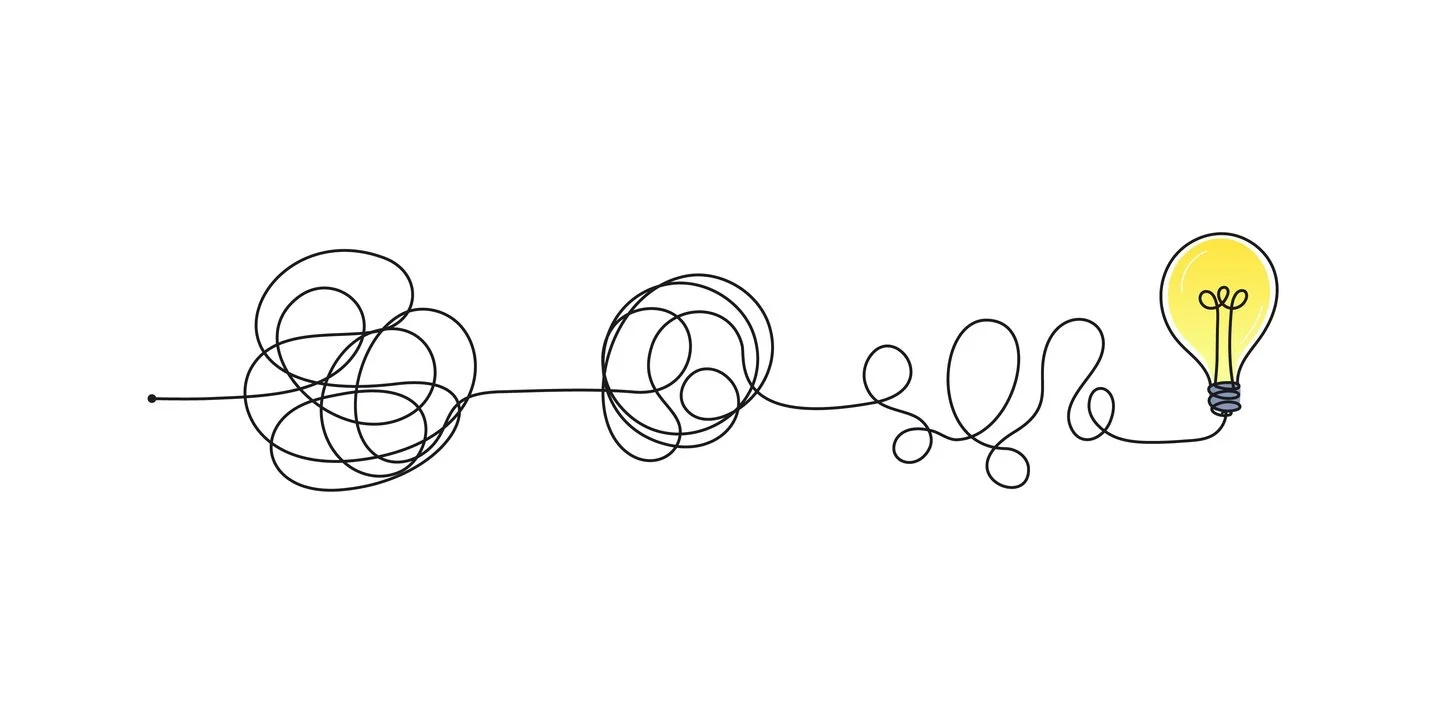
I like to call it the “messy middle.” The in-between where we sense change coming but don’t yet know what it looks like. It’s where the old identity fades before the new one fully form, and where much of the real transformation happens.
One of the biggest emotional shifts I saw in myself, and my clients, happens when we move from belonging to a company, brand, or job title, to belonging to ourselves.
For many high-achieving, ambitious women, this feels like uncharted territory. They’ve defined themselves through achievement recognition for so long that even considering leaving can feel like failure.
But the real work of transition isn’t logistical, it’s emotional. It’s about identity, belonging, and letting go.
It starts with asking:
Who am I today?
What does a career that fits this version of me look like?
What could I create if I designed work around my life, not the other way around?
That’s where the idea of a portfolio career comes into a career made up of several complementary roles or projects, built around who we are and what matters to us.
In a portfolio career, we:
Disassociate our identity from a single job or title
Leverage different parts of our experience and expertise
Enjoy variety, flexibility, and creative freedom
Adjust our work to different seasons of life
Design careers that reflect the lives we want — not ones we have to fit into
Portfolio careers can bring choice, balance, and ownership. They let us double down on our strengths rather than patch up our weaknesses. They make change and non-linear path - normal.
Because at the heart of it, a portfolio career isn’t just a professional model. It’s a mindset. One that acknowledges that we evolve — and that our careers should be evolving with us.
We do not always choose when one chapter ends, but we can choose how the next one begins.
Writing on career redesign, portfolio careers, and navigating professional transitions. Most articles first appear on LinkedIn and are archived here.
Career transition & its messy middle
Es beginnt alles mit einer Idee.
We humans like certainty; we always have.
For most of our history, our survival depended on it. This is where our herd instinct comes from: wanting to fit in, to belong, to avoid being disliked, rejected, or worst of all - abandoned.
Abandonment once meant death. We couldn’t survive long without the tribe.
So it’s no surprise that we prefer our comfort zones. We might not love them, but they feel safe, so we stay.
Until something shifts.
Sometimes we reach a breaking point where we know the old path no longer works. Other times, life decides for us.
Either way, change rarely feels easy. And it’s always a process.
The first wave: relief & excitement
At first, there’s relief.
Even if the decision was made for us, somewhere deep down, we know the old situation wasn’t right anymore.
Then comes excitement - all the opportunities we could finally explore!
But soon, that excitement turns to overwhelm. Too many options can paralyze us.
We go from dreaming about freedom... to fearing uncertainty.
Even when we longed to leave that unfulfilling job, we still miss the safety of belonging to a company, a team, a title.
That sense of being “part of something” fades, and suddenly we’re in the messy middle:
no clear role, no new identity yet — just a lot of space, possibilities, and confusion.
The messy middle itself
This phase often catches people off guard — especially if we’ve never been through a real transition before.
By that I mean the space in between jobs: When there’s no next role lined up, when the path ahead is unclear, and when every option has its pros and cons — leaving us unsure what’s right.
It’s a time of confusion, self-doubt, ups, and downs.
Even with financial security, we can feel deeply unsettled because we’re no longer part of something bigger.
Our minds start spinning:
“There’s too much competition.”
“There are no good jobs left.”
“AI will replace us anyway.”
And from that mindset, it’s hard to move forward or create anything new.
What’s really going on
Our sense of safety has been shaken, not just mentally, but physically.
Our nervous system goes into fight-or-flight, even when no real threat exists.
It’s as if a bear is chasing us… Except that the “bear” is uncertain.
And that’s completely natural.
We’re wired for safety, not for the unknown. Yet every reinvention asks us to walk right into that unknown.
How to move through it
Here are a few ways to make that “messy middle” a little easier:
Accept the mess: Change is rarely linear. It’s a confusing, emotional, and rollercoaster ride of ups and downs. Let go of how you think it should look — life often has better plans than we do.
Acknowledge the identity shift: Career change isn’t just external; it’s deeply personal. You’re not just leaving a job — you’re letting go of an identity. Feel everything: doubt, excitement, impatience, confusion — it’s all part of the process.
Stay open to new possibilities: The unknown feels scary, but it’s also expansive. After years in one field, we can develop tunnel vision.
Try this:
• Talk to people outside your industry.
• Connect with those who’ve built unconventional careers.
• Reach out to people you admire and learn from them.
• Engage in reflection — alone, with a coach, or even through writing.
Be patient with yourself: Transitions take time. Transformation is a process, not a project. Everything you’re feeling is valid — and temporary.
Closing reflection
The messy middle isn’t a mistake — it’s where your next chapter is forming, quietly, beneath the surface.
If you’re there right now, remember: You’re not behind. You’re becoming.
Writing on career redesign, portfolio careers, and navigating professional transitions. Most articles first appear on LinkedIn and are archived here.